Why Won’t My USB-C Gadget Charge with a PD Charger?
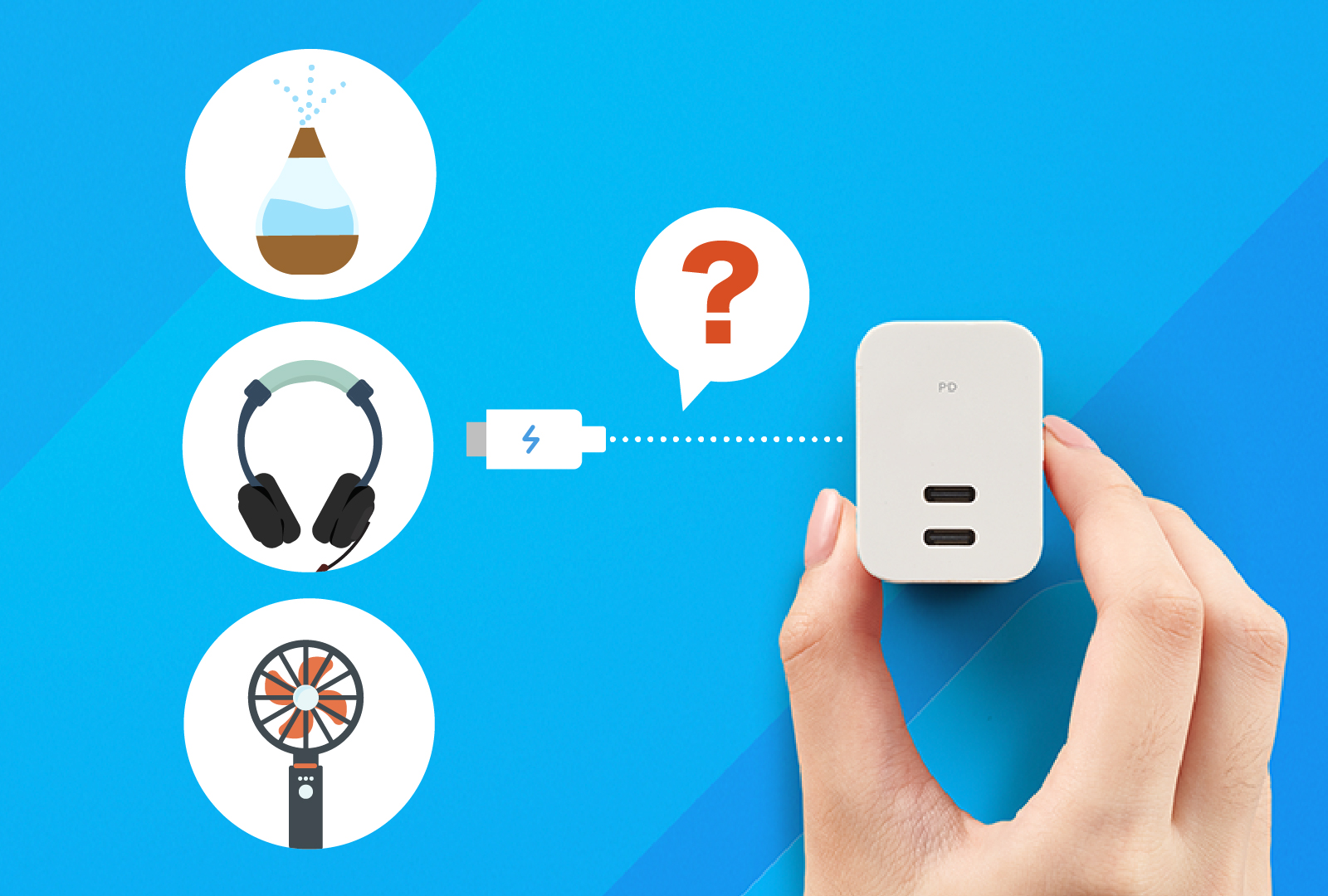
Ever had this happen? You buy a gadget—a mini fan, Bluetooth speaker, or curling iron. It’s got a USB-C port, so you plug in your PD charger… and nothing happens. Frustrating, right? Don’t worry—you’re not alone. Let’s unpack why this happens and what it really means. (Special thanks to Berry from Delta Electronics’ PSBG R&D team for technical insights.)
Quick Refresher: What is PD Fast Charging?
PD (Power Delivery) is a fast-charging standard that works through the USB-C connector. Unlike traditional 5V USB charging, PD can adjust voltage and current dynamically, delivering more power when the device supports it. This is why your phone or laptop can charge much faster with a PD charger.
Reason 1: PD Chargers and Devices Need to “Talk”
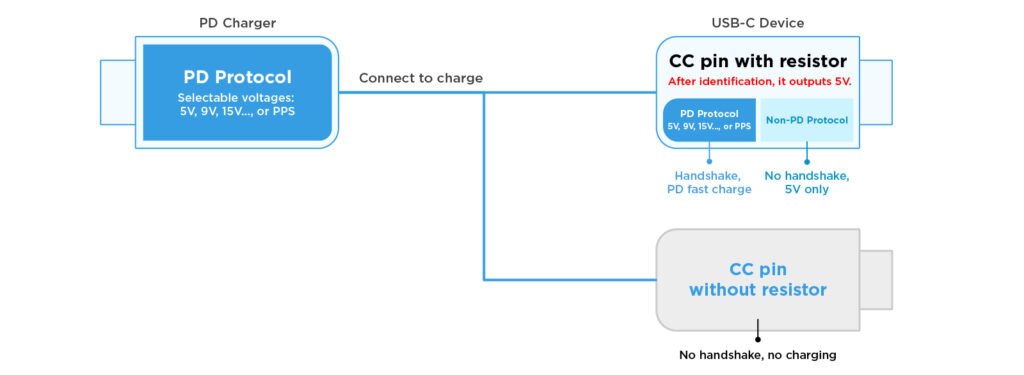
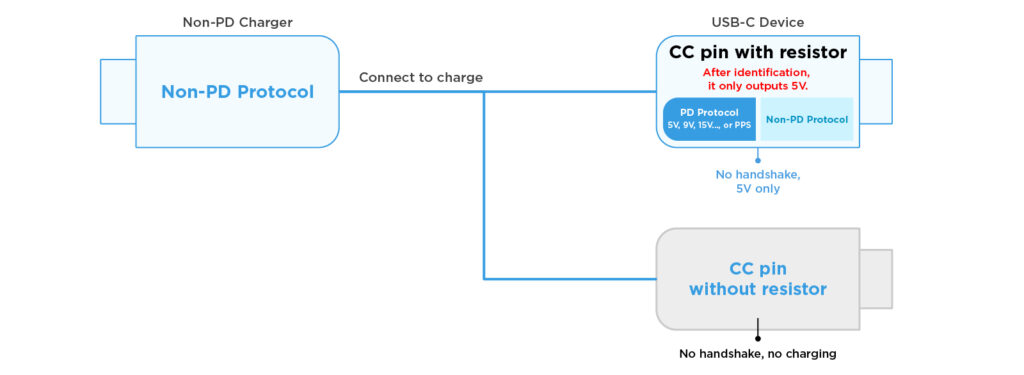
When you plug in a USB-C device, the charger and gadget first go through a recognition process—a little “handshake.” If both sides support PD, they confirm compatibility before switching to higher speeds. Here’s the issue: many small gadgets don’t include the internal parts (pins or resistors) required for this handshake. These devices are designed for simple 5V charging only. That’s why they’ll charge with a USB-A charger (via a USB-A to USB-C cable), but not with a PD charger. Your PD charger isn’t broken—the device simply wasn’t designed to communicate with it.
Charging Status Discussion:
Reason 2: A USB-C Port Doesn’t Always Mean PD Support
It’s easy to assume that a USB-C port automatically means PD compatibility. But the shape of the port doesn’t guarantee the technology behind it. Think Bluetooth speakers, electric toothbrushes, mini fans, or styling tools. Many of these gadgets use USB-C for convenience, but internally they only support basic 5V charging.
Are There Exceptions?
Interestingly, some non-PD devices can still be charged with a PD charger, but usually only under special circumstances— like when a cable is built to “trick” the charger into supplying 5V. But these are technical workarounds. They’re not always safe or reliable for daily use— not recommended!
The Takeaway
If your USB-C gadget doesn’t charge with a PD charger, don’t panic. It’s not a defect—just design. Most of these devices are meant for simple 5V charging. Pro tip: Always check the product specs before you buy. Knowing whether a device supports PD fast charging or only 5V can save you the frustration of wondering if your charger is at fault (spoiler: it usually isn’t).
FAQ: USB-C Devices & PD Chargers
Q: Can I use a PD charger for all USB-C devices? A: Not always. Many gadgets with USB-C ports only support standard 5Vcharging, so they won’t work with PD chargers. Q: Will using a PD charger damage a non-PD device? A: Generally no. The charger simply won’t deliver power if the device can’t communicate. But always confirm your device’s charging specs. Q: Why do some USB-C appliances only work with USB-A chargers? A: Because they’re designed for simple 5V input. USB-A chargers and USB-A to USB-C cables deliver that without the PD handshake.
We use cookies on our website to give you the most relevant experience by remembering your preferences and repeat visits. By clicking “Accept All”, you consent to the use of ALL the cookies.
This website uses cookies to improve your experience while you navigate through the website. Out of these, the cookies that are categorized as necessary are stored on your browser as they are essential for the working of basic functionalities of the website. We also use third-party cookies that help us analyze and understand how you use this website. These cookies will be stored in your browser only with your consent. You also have the option to opt-out of these cookies. But opting out of some of these cookies may affect your browsing experience.
Necessary cookies are absolutely essential for the website to function properly. These cookies ensure basic functionalities and security features of the website, anonymously.
Cookie
Duration
Description
cookielawinfo-checkbox-analytics
11 months
This cookie is set by GDPR Cookie Consent plugin. The cookie is used to store the user consent for the cookies in the category "Analytics".
cookielawinfo-checkbox-functional
11 months
The cookie is set by GDPR cookie consent to record the user consent for the cookies in the category "Functional".
cookielawinfo-checkbox-necessary
11 months
This cookie is set by GDPR Cookie Consent plugin. The cookies is used to store the user consent for the cookies in the category "Necessary".
cookielawinfo-checkbox-others
11 months
This cookie is set by GDPR Cookie Consent plugin. The cookie is used to store the user consent for the cookies in the category "Other.
cookielawinfo-checkbox-performance
11 months
This cookie is set by GDPR Cookie Consent plugin. The cookie is used to store the user consent for the cookies in the category "Performance".
viewed_cookie_policy
11 months
The cookie is set by the GDPR Cookie Consent plugin and is used to store whether or not user has consented to the use of cookies. It does not store any personal data.
Functional cookies help to perform certain functionalities like sharing the content of the website on social media platforms, collect feedbacks, and other third-party features.
Performance cookies are used to understand and analyze the key performance indexes of the website which helps in delivering a better user experience for the visitors.
Analytical cookies are used to understand how visitors interact with the website. These cookies help provide information on metrics the number of visitors, bounce rate, traffic source, etc.
Advertisement cookies are used to provide visitors with relevant ads and marketing campaigns. These cookies track visitors across websites and collect information to provide customized ads.